Herat · Delhi
By commission — £1,450
Made to order · one size · six to eight weeks
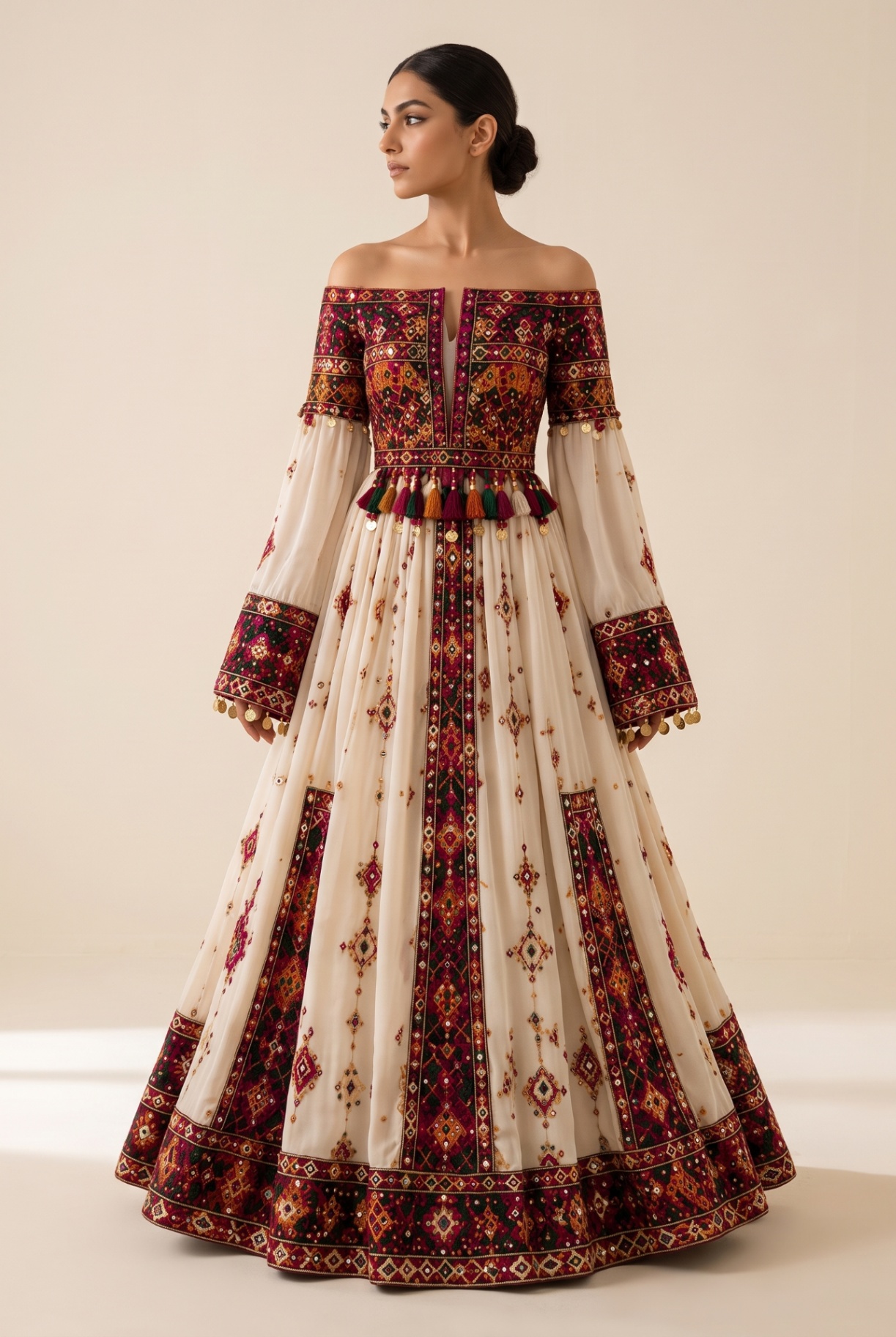
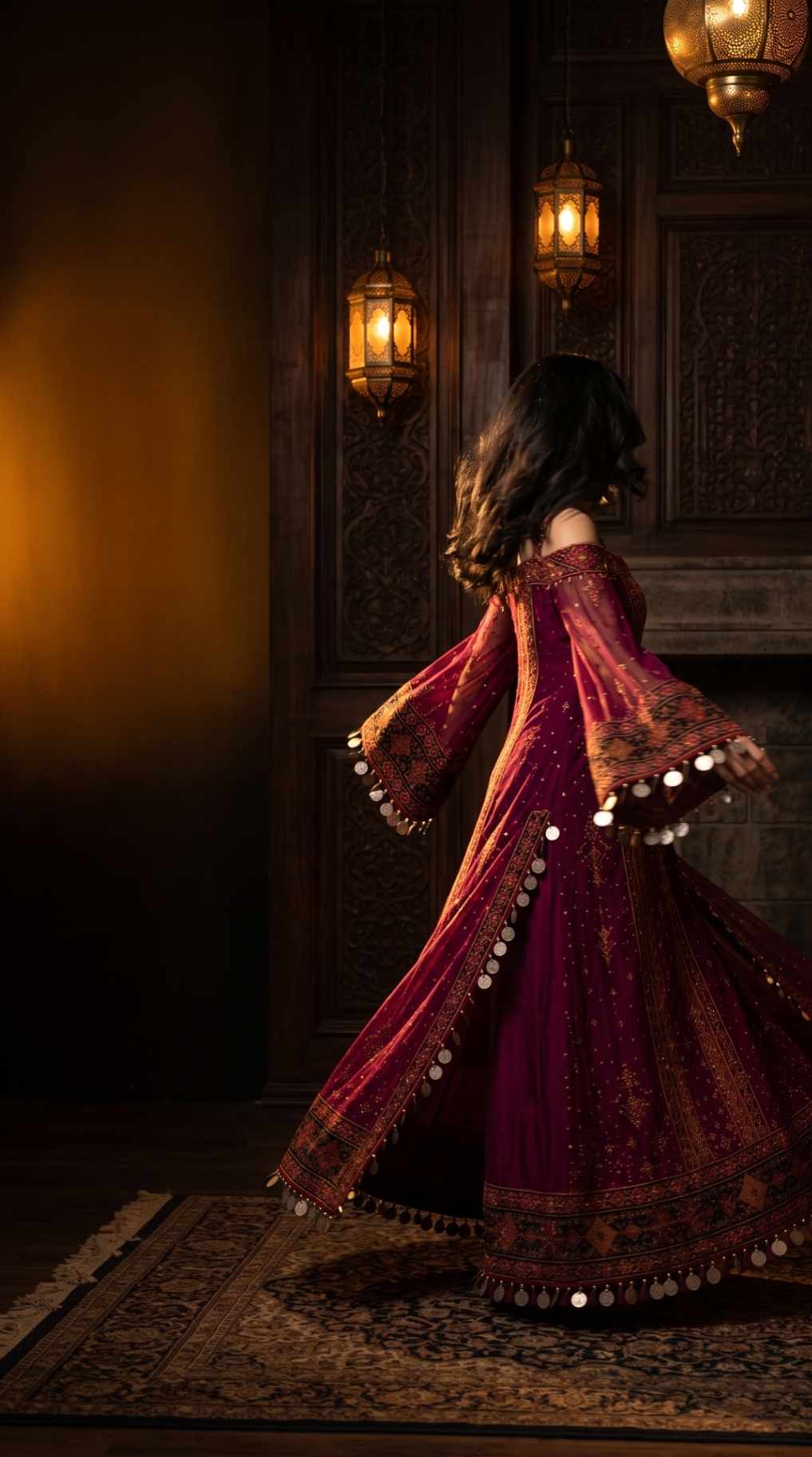
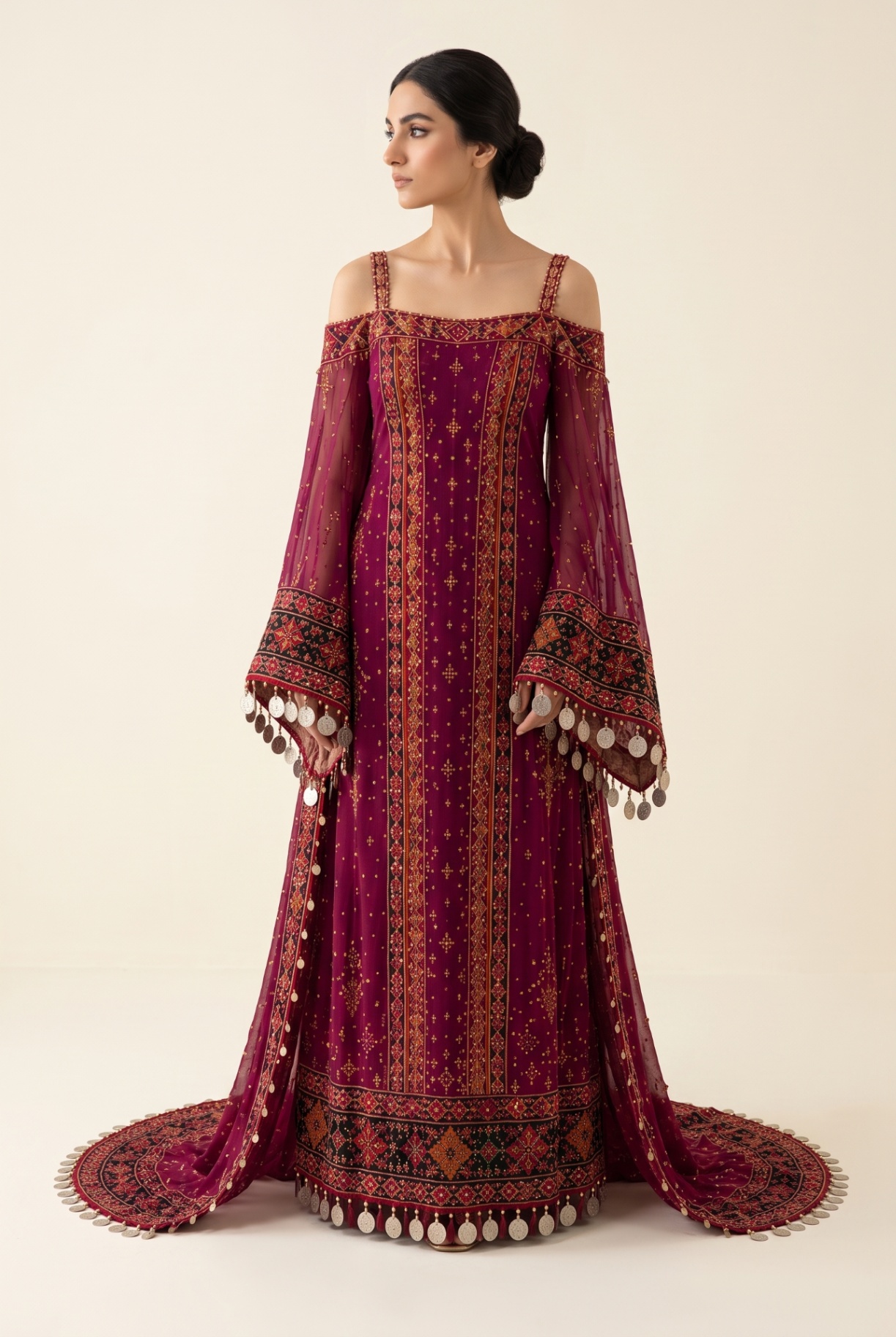
Deep magenta chiffon in a long straight column, its off-shoulder neckline suspended on two fine embroidered straps, the body scattered with fine gold speckle embroidery and narrow vertical bands of gold motifs.
The sleeves are the argument: wide, unlined, falling to deep borders of black-ground geometric embroidery in red, orange and cream, hung with antique silver coins that move a half-second behind you.
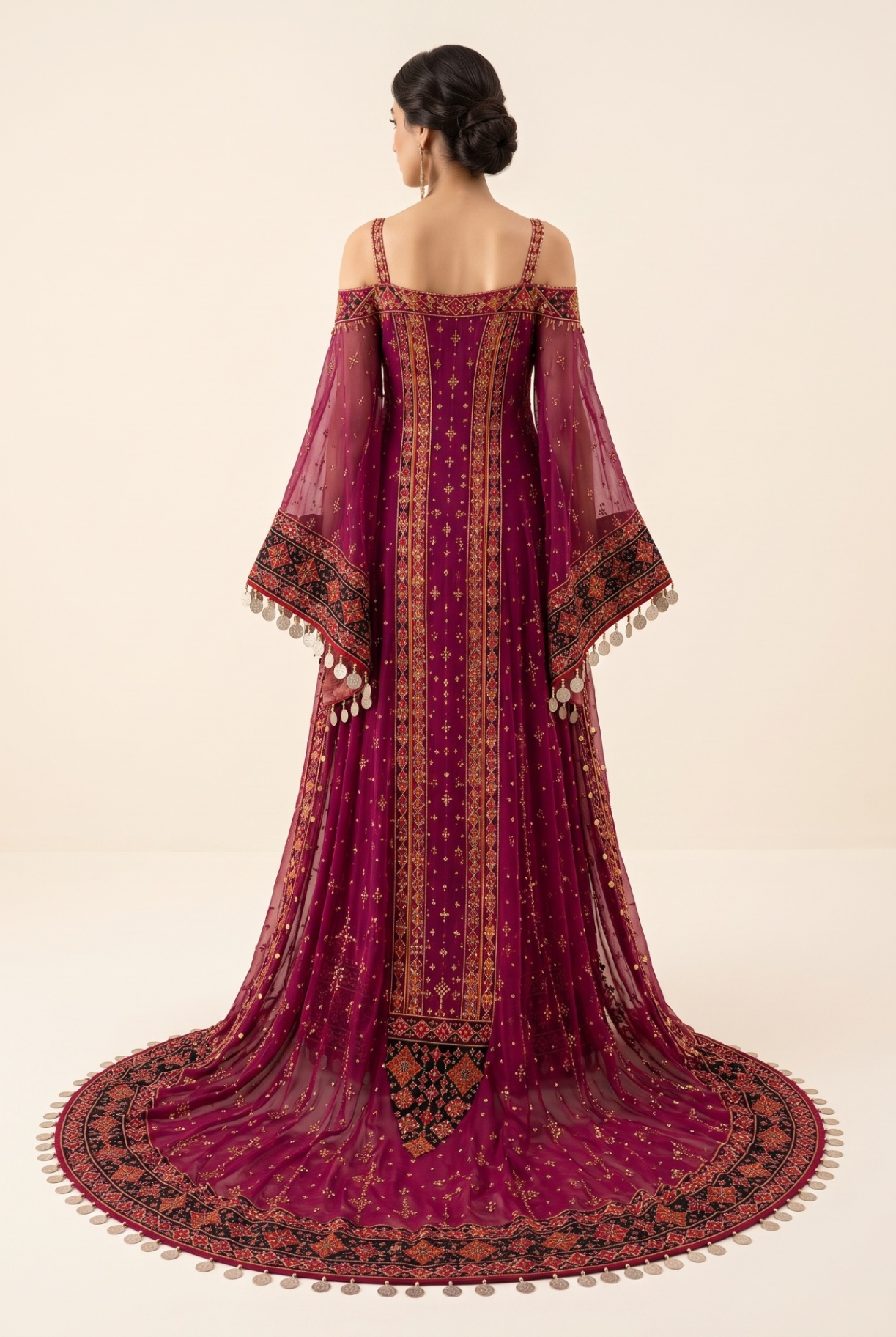
A rounded train sweeps behind, its full curved edge finished in the same worked border and coin fringe.
We take on a small number of commissions each season. A member of the atelier will write to you personally.
- Silk chiffon over full lining
- Hand-worked geometric border bands
- Antique-finish coin fringe at cuffs and hem
- Sweeping rounded train
- Made to order
Herat · Delhi
By commission — £1,450
Made to order · one size · six to eight weeks
Deep magenta chiffon in a long straight column, its off-shoulder neckline suspended on two fine embroidered straps, the body scattered with fine gold speckle embroidery and narrow vertical bands of gold motifs.
The sleeves are the argument: wide, unlined, falling to deep borders of black-ground geometric embroidery in red, orange and cream, hung with antique silver coins that move a half-second behind you.
A rounded train sweeps behind, its full curved edge finished in the same worked border and coin fringe.
We take on a small number of commissions each season. A member of the atelier will write to you personally.
- Silk chiffon over full lining
- Hand-worked geometric border bands
- Antique-finish coin fringe at cuffs and hem
- Sweeping rounded train
- Made to order
I · The Name
سلطانه — نامِ حکم
Where the name comes from
For six centuries the word sultana meant a woman with a seal — a wife who could refuse a king, a mother who could send an army back to the mountains. Gauhar Shad Begum built the Musallah of Herat; Razia Sultana rode into Delhi at the head of her own guard.
This dress is cut for the walk between the door and the throne. The sleeves are the announcement. The train is the exit.
زنی که تخت را نگه داشت، در سکوت
Zan-e ke takht rā negāh dāsht, dar sokoot —
"The woman who held the throne — did so in silence."
— Attributed to a Herati scribe, 15th c.
II · The Cloth
How it is made
Deep magenta chiffon in a long straight column, its off-shoulder neckline suspended on two fine embroidered straps, the body scattered with fine gold speckle embroidery and narrow vertical bands of gold motifs.
The sleeves are wide, unlined, falling to deep borders of black-ground geometric embroidery in red, orange and cream, hung with antique silver coins that move a half-second behind you.
A rounded train sweeps behind, its full curved edge finished in the same worked border and coin fringe.
III · The Wearing
One size, cut in the Afghan way
One size, held at the shoulder line by the fine embroidered straps and at the waist by the natural fall of the chiffon. The train is short by design — long enough to announce a room, short enough to walk through it.
Cut for entrances, and for the walk away afterwards.
Every Gulālai dress is one size. It is the older tradition — the fit is found in the sash, the fall of the sleeve, the shoulder line. The garment answers to the body, not the other way round.
Turn the page