Kabul · Mazar-i-Sharif
By commission — £980
Made to order · one size · six to eight weeks
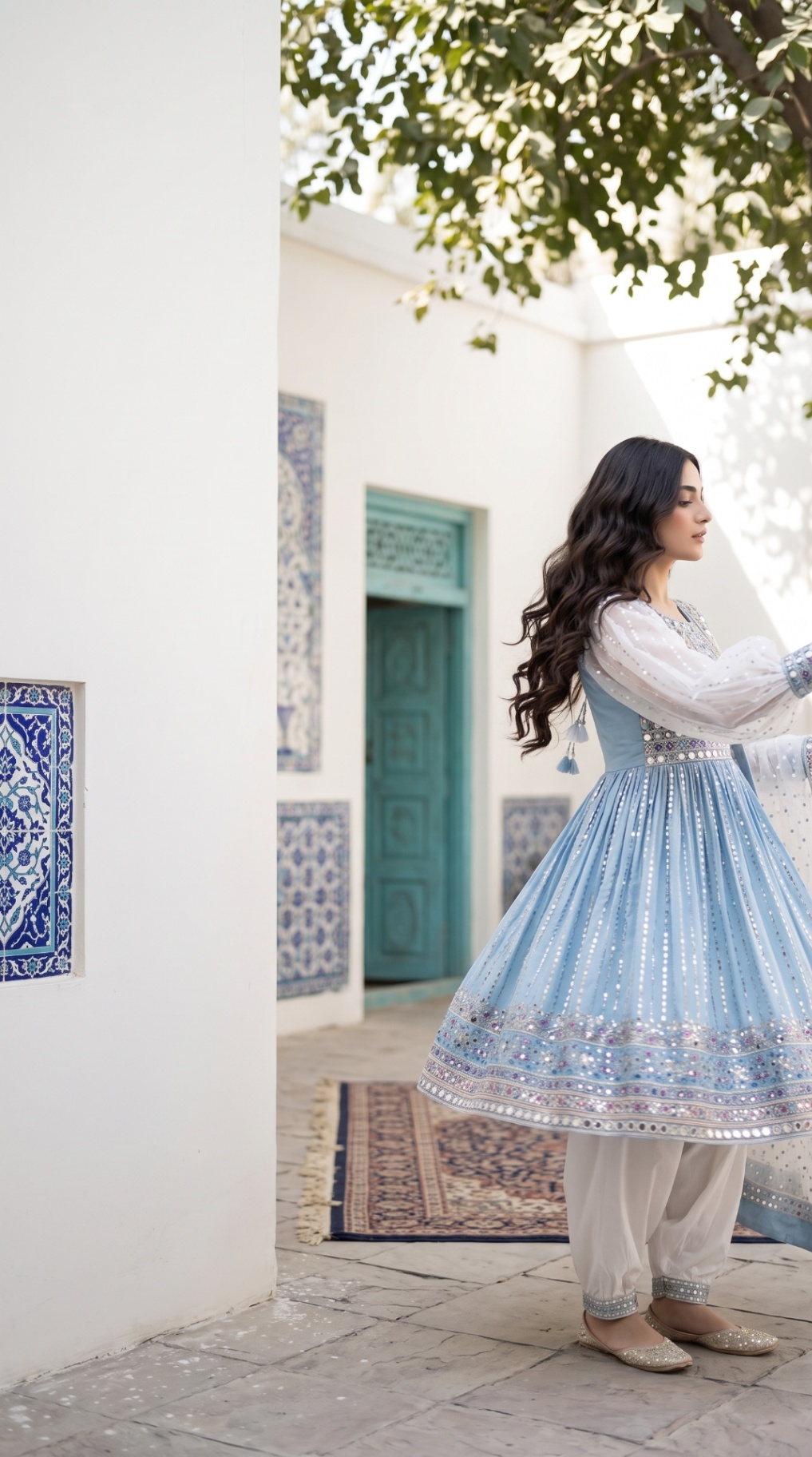
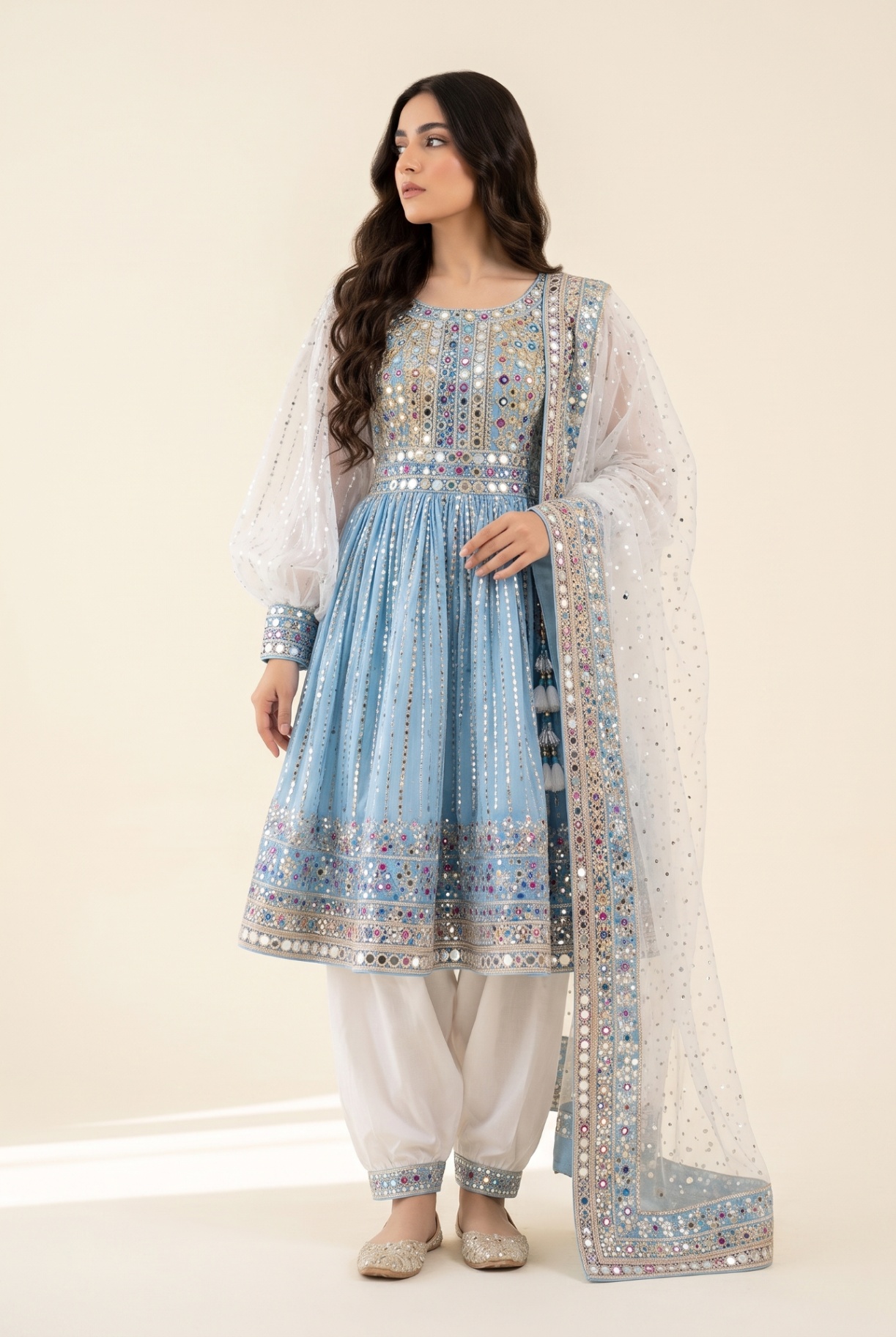
A knee-length powder-blue frock over loose white shalwar, its bodice and skirt covered in fine vertical lines of mirror work in silver, gold, pink and teal, so the piece throws light with every movement.
Sheer white organza balloon sleeves gather into mirrored cuffs; a matching sequin-spotted dupatta carries a deep embroidered border. A small white tassel tie falls at the front.
The lightest thing we make, and the easiest to wear.
We take on a small number of commissions each season. A member of the atelier will write to you personally.
- Three-piece — frock, shalwar, dupatta
- Hand-set mirror work throughout
- Sheer organza sleeves with embroidered cuffs
- Fully lined frock
- Made to order
Kabul · Mazar-i-Sharif
By commission — £980
Made to order · one size · six to eight weeks
A knee-length powder-blue frock over loose white shalwar, its bodice and skirt covered in fine vertical lines of mirror work in silver, gold, pink and teal, so the piece throws light with every movement.
Sheer white organza balloon sleeves gather into mirrored cuffs; a matching sequin-spotted dupatta carries a deep embroidered border. A small white tassel tie falls at the front.
The lightest thing we make, and the easiest to wear.
We take on a small number of commissions each season. A member of the atelier will write to you personally.
- Three-piece — frock, shalwar, dupatta
- Hand-set mirror work throughout
- Sheer organza sleeves with embroidered cuffs
- Fully lined frock
- Made to order
I · The Name
ستاره — ستارهیِ صبح
Where the name comes from
The night sky over the Hindu Kush was, for a long time, the only map anyone owned. Traders read stars back to caravan camps at Bamiyan; women in the courtyards of Kabul learned them from grandmothers who called them by name.
Sitara belongs to that older habit of looking up. Mirror-set, quiet, and always catching the room.
د ستوري رڼا ده، په لار کې مې پاتې
Da storee raṇā da, pa lār ke me pāte —
"The light of a star, kept for me on the road."
— Pashto folk verse
II · The Cloth
How it is made
A knee-length powder-blue frock over loose white shalwar, its bodice and skirt covered in fine vertical lines of mirror work in silver, gold, pink and teal, so the piece throws light with every movement.
Sheer white organza balloon sleeves gather into mirrored cuffs; a matching sequin-spotted dupatta carries a deep embroidered border. A small white tassel tie falls at the front.
III · The Wearing
One size, cut in the Afghan way
A three-piece, cut one size. The frock skims; the shalwar gathers at the ankle; the dupatta is worn long from the shoulder, or drawn across the head for the moment of nikkah.
The lightest thing we make. Written for a mehndi, a first Eid, a courtyard afternoon.
Every Gulālai dress is one size. It is the older tradition — the fit is found in the sash, the fall of the sleeve, the shoulder line. The garment answers to the body, not the other way round.
Turn the page