Herat · Kabul
By commission — £1,680
Made to order · one size · six to eight weeks
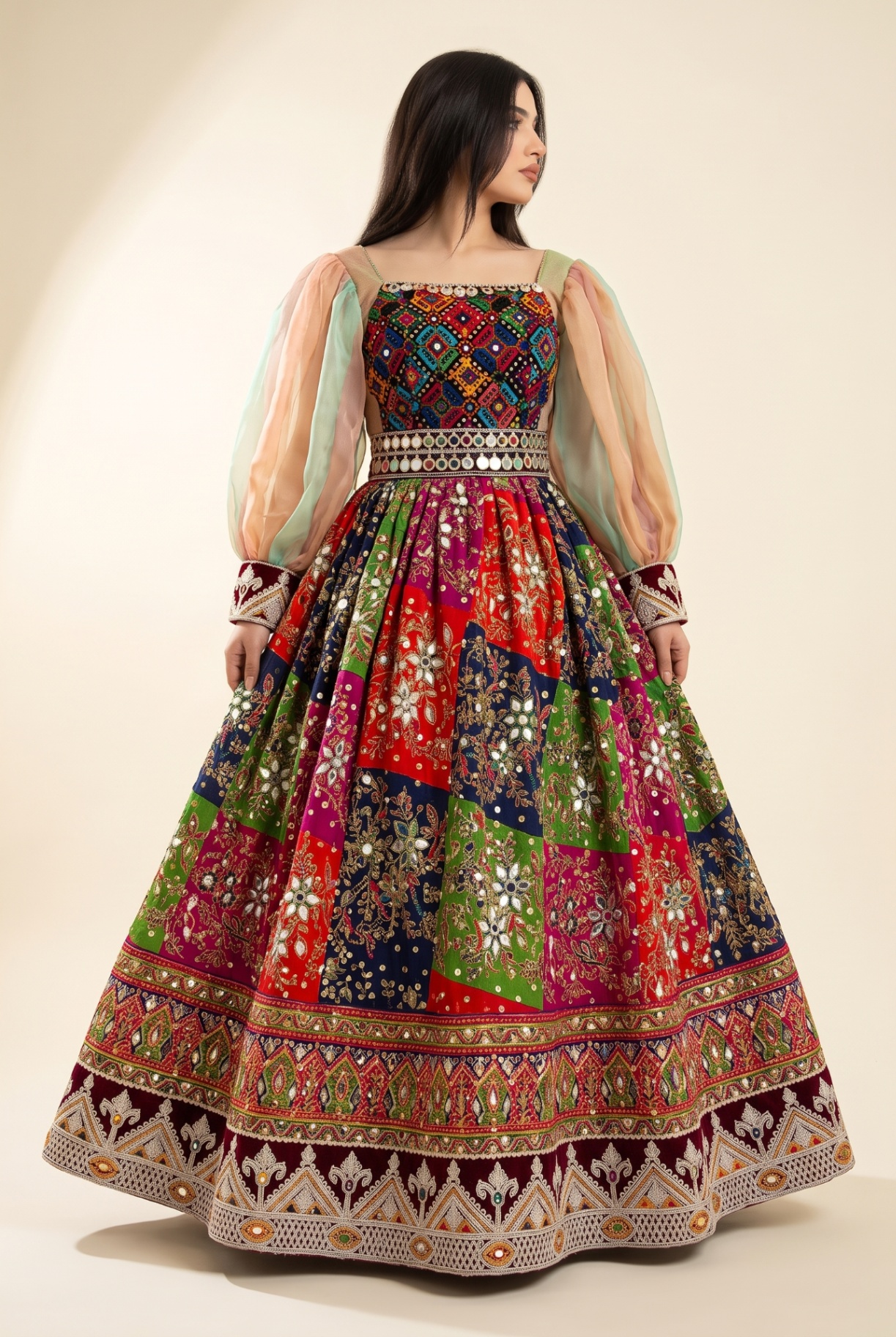
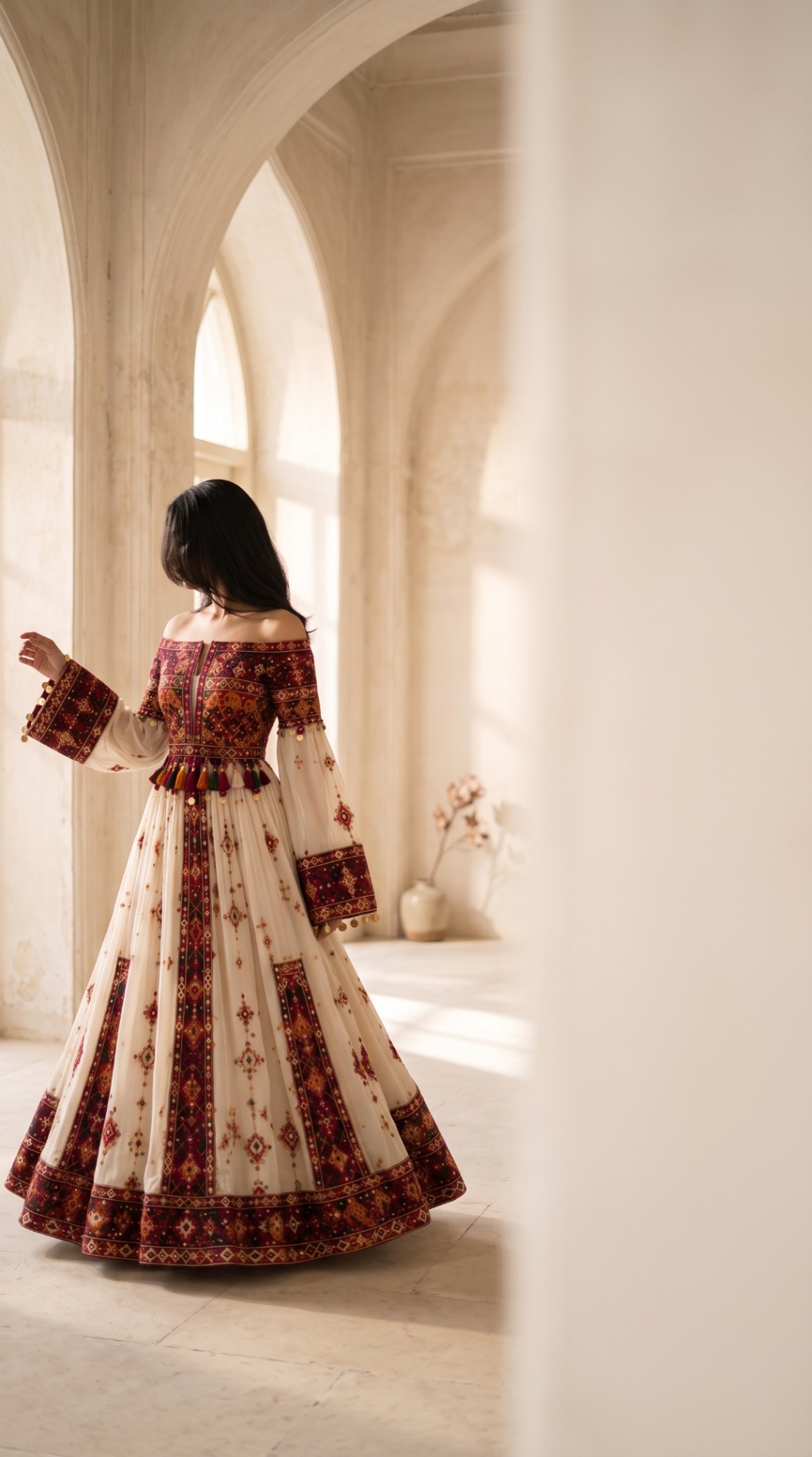
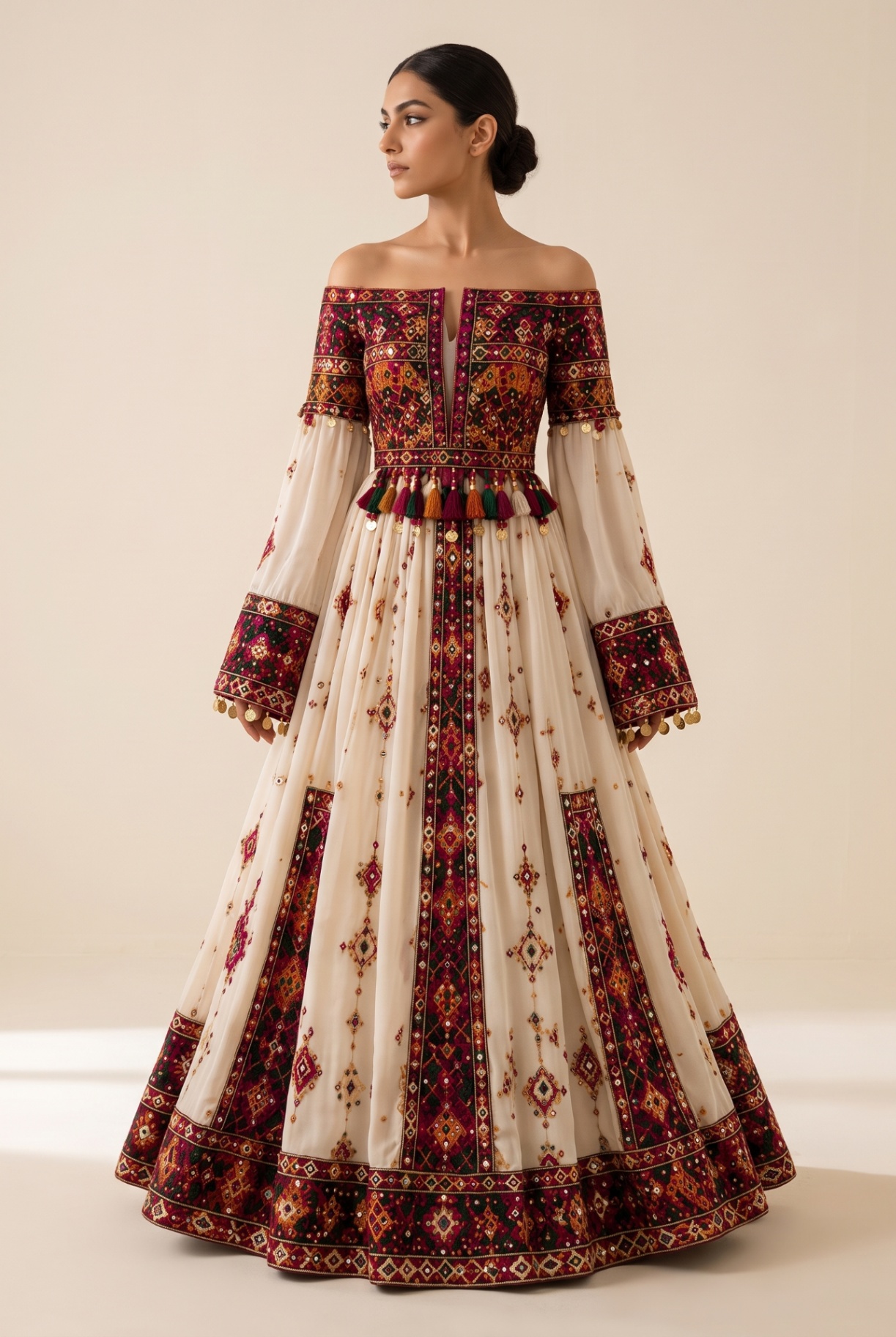
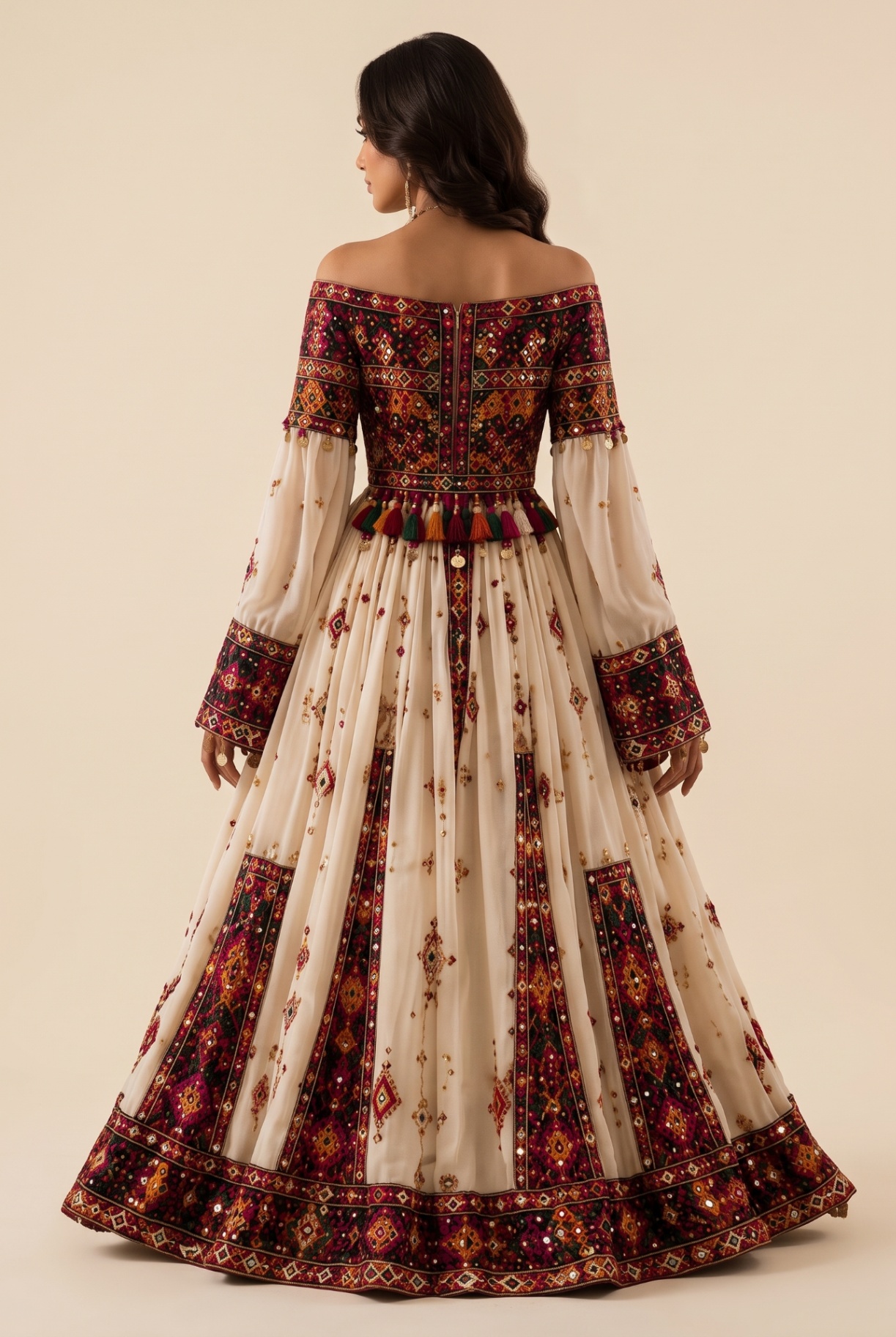
A structured off-shoulder bodice is worked edge to edge in maroon, magenta, orange and forest-green geometric embroidery, set with mirrors and finished with a fall of handmade silk tassels at the waist in six colours.
Below, ivory matte silk crepe opens into a full floor-length skirt, its embroidered vertical panels drawing the eye downward to a deep worked hem. Long flowing sleeves end in wide embroidered cuffs hung with small gold coins.
It is the quietest palette in the collection and, for that reason, the loudest embroidery.
We take on a small number of commissions each season. A member of the atelier will write to you personally.
- Premium matte silk crepe
- Cotton-silk lining, fully lined
- Hand-worked Afghan and Tajik embroidery
- Mirrors, metallic thread, coins
- Handmade silk and cotton tassels
Herat · Kabul
By commission — £1,680
Made to order · one size · six to eight weeks
A structured off-shoulder bodice is worked edge to edge in maroon, magenta, orange and forest-green geometric embroidery, set with mirrors and finished with a fall of handmade silk tassels at the waist in six colours.
Below, ivory matte silk crepe opens into a full floor-length skirt, its embroidered vertical panels drawing the eye downward to a deep worked hem. Long flowing sleeves end in wide embroidered cuffs hung with small gold coins.
It is the quietest palette in the collection and, for that reason, the loudest embroidery.
We take on a small number of commissions each season. A member of the atelier will write to you personally.
- Premium matte silk crepe
- Cotton-silk lining, fully lined
- Hand-worked Afghan and Tajik embroidery
- Mirrors, metallic thread, coins
- Handmade silk and cotton tassels
I · The Name
شهدخت — دخترِ شاه
Where the name comes from
In the old chronicles of Herat and Ghazni, shahdokht — literally daughter of the shah — was the title given to the women who governed household and court alike: keepers of the seal, patrons of poets, first readers of every letter that arrived from Isfahan or Delhi.
The gown carries the same posture. Nothing about it hurries; nothing about it apologises.
بنشین بر لبِ جوی و گذر عمر ببین
Bansheen bar lab-e joo, o guzar-e omr bebeen —
"Sit by the river's edge, and watch a life pass by."
— Hafez, Shiraz
II · The Cloth
How it is made
The bodice is worked edge to edge in maroon, magenta, orange and forest-green geometric embroidery, set with mirrors and finished with a fall of handmade silk tassels at the waist in six colours.
Below, ivory matte silk crepe opens into a full floor-length skirt, its embroidered vertical panels drawing the eye downward to a deep worked hem. Long flowing sleeves end in wide embroidered cuffs hung with small gold coins.
III · The Wearing
One size, cut in the Afghan way
Cut in the Afghan way — one size, taken in at the waist by a wide worked sash, held at the shoulder by the fall of the sleeve. The silhouette answers to the body, not the other way round.
For nikkah, for engagement, for the quiet hour of an Eid morning.
Every Gulālai dress is one size. It is the older tradition — the fit is found in the sash, the fall of the sleeve, the shoulder line. The garment answers to the body, not the other way round.
Turn the page