Kabul · Lahore
By commission — £2,900
Made to order · one size · six to eight weeks
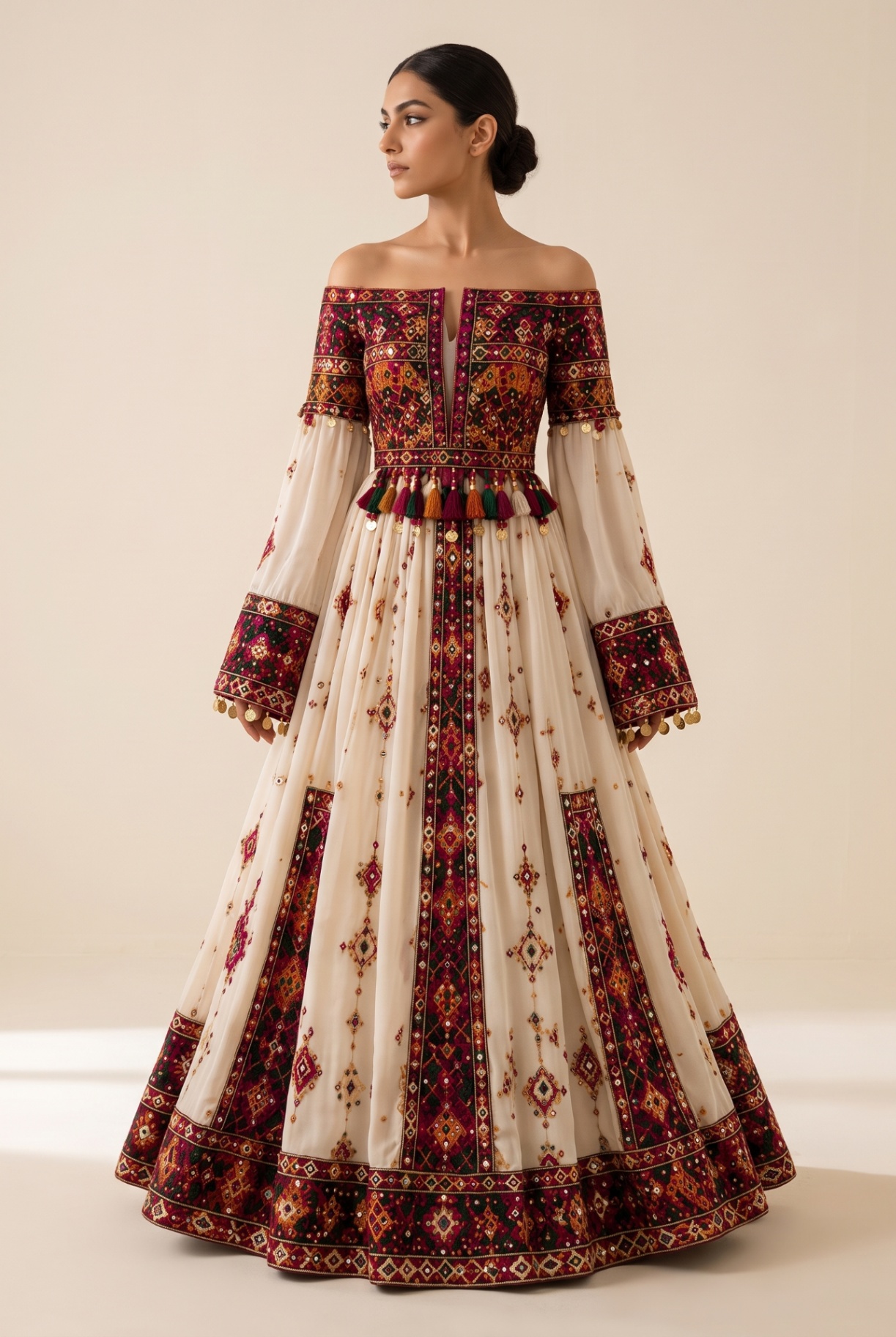
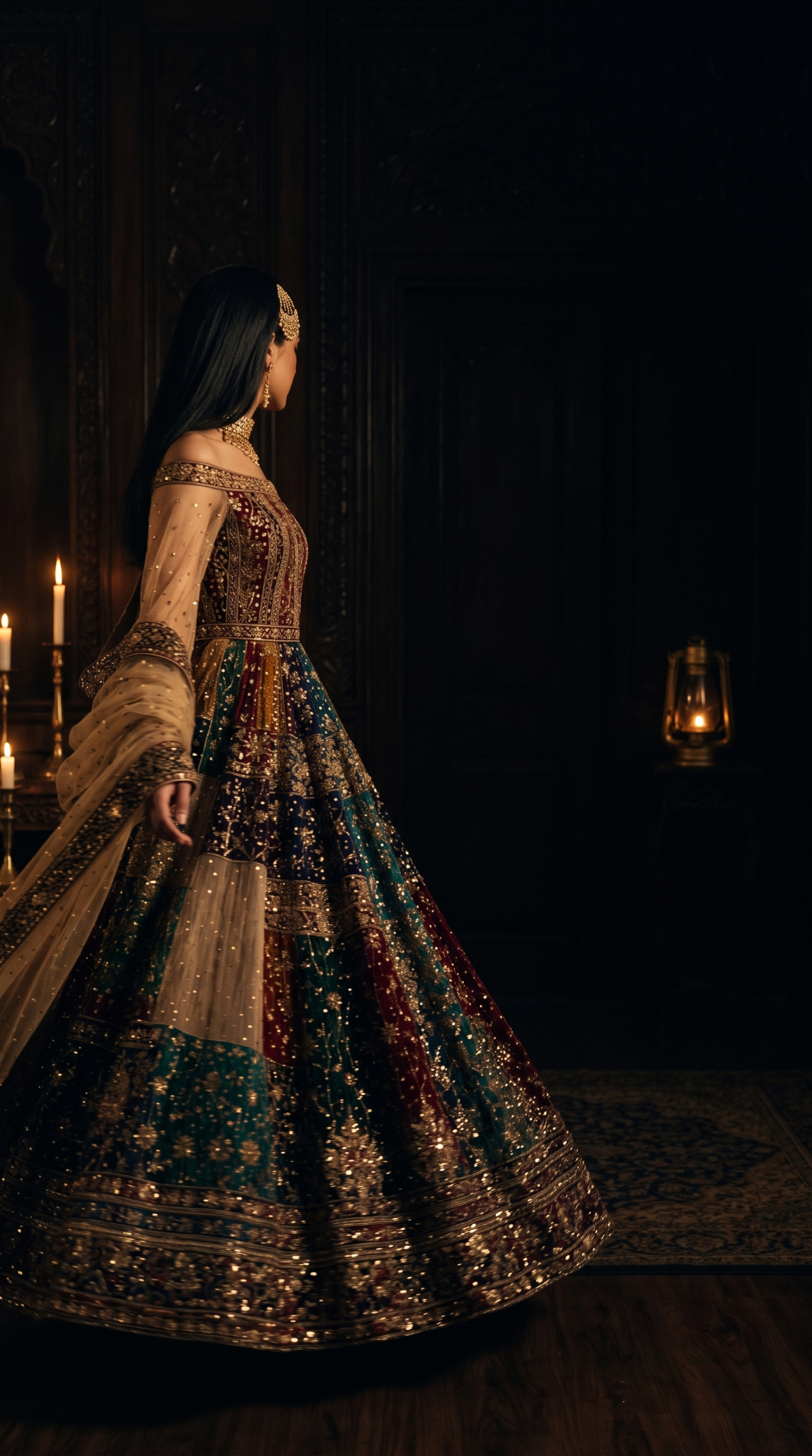
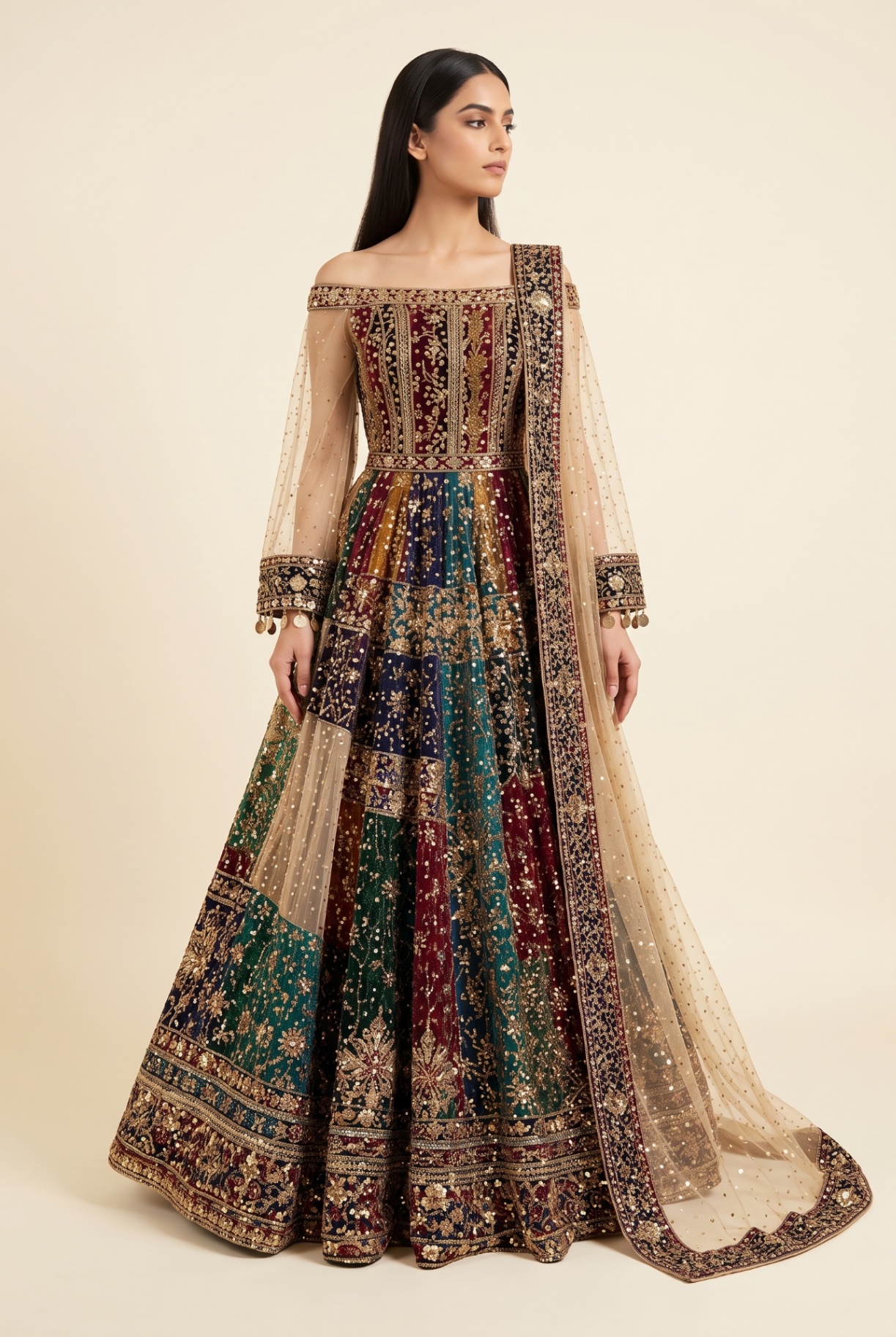
A structured off-shoulder bodice of vertical embroidered panels in deep maroon, gold and black, worked in fine metallic zardozi above an embellished waistband.
From the waist the gown opens into large panels of maroon, forest green, teal, navy and black, every one buried under gold sequin florals and metallic embroidery, finishing in wide horizontal border bands stacked at the hem.
Sheer champagne-gold net sleeves and a matching dupatta soften a gown that is otherwise pure weight and light.
We take on a small number of commissions each season. A member of the atelier will write to you personally.
- Panelled construction, individually embroidered
- Gold sequin and metallic zardozi work
- Champagne net sleeves and dupatta
- Fully lined
- Our most worked piece
Kabul · Lahore
By commission — £2,900
Made to order · one size · six to eight weeks
A structured off-shoulder bodice of vertical embroidered panels in deep maroon, gold and black, worked in fine metallic zardozi above an embellished waistband.
From the waist the gown opens into large panels of maroon, forest green, teal, navy and black, every one buried under gold sequin florals and metallic embroidery, finishing in wide horizontal border bands stacked at the hem.
Sheer champagne-gold net sleeves and a matching dupatta soften a gown that is otherwise pure weight and light.
We take on a small number of commissions each season. A member of the atelier will write to you personally.
- Panelled construction, individually embroidered
- Gold sequin and metallic zardozi work
- Champagne net sleeves and dupatta
- Fully lined
- Our most worked piece
I · The Name
دُرِّ شاه — مروارید
Where the name comes from
The Mughal courts of Kabul and Lahore weighed their inheritance in pearls. A pearl passed from mother to daughter across five generations before it was allowed near the throne; the greatest of them was called Dur-e-Shah, the King's Pearl, and no envoy was ever shown it twice.
This gown is the answer to that legend. Panels of deep colour buried under gold. A structured bodice that stands whether you are in it or not. The heaviest, and therefore the slowest, thing we make.
دُرِّ شاهی — یادگارِ مادران
Durr-e shāhi — yādgār-e mādarān —
"The king's pearl — an heirloom of mothers."
— Mughal court verse
II · The Cloth
How it is made
A structured off-shoulder bodice of vertical embroidered panels in deep maroon, gold and black, worked in fine metallic zardozi above an embellished waistband.
From the waist the gown opens into large panels of maroon, forest green, teal, navy and black, every one buried under gold sequin florals and metallic embroidery, finishing in wide horizontal border bands stacked at the hem.
Sheer champagne-gold net sleeves and a matching dupatta soften a gown that is otherwise pure weight and light.
III · The Wearing
One size, cut in the Afghan way
One size, structured. The bodice is boned in the old way; the panels are drafted to fall from the natural waist regardless of the wearer. The dupatta is worn long from one shoulder, or drawn over the head for the family portrait.
For the largest wedding of a family. Nothing else will do it justice.
Every Gulālai dress is one size. It is the older tradition — the fit is found in the sash, the fall of the sleeve, the shoulder line. The garment answers to the body, not the other way round.
Turn the page